Certification
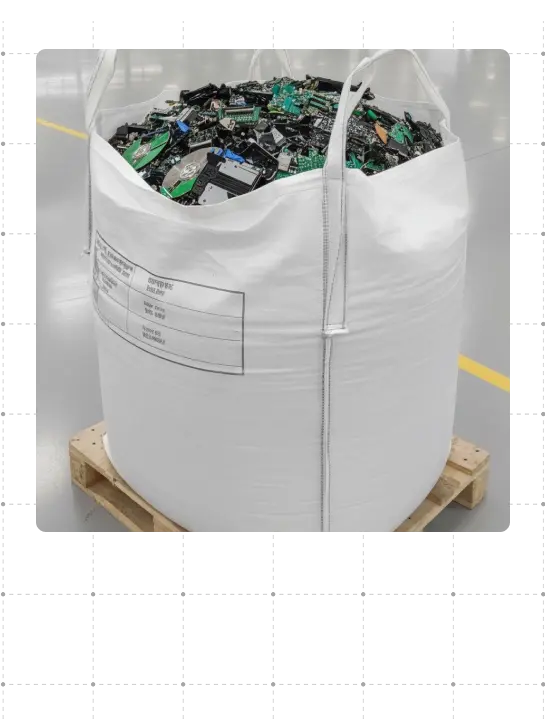
Every device leaving your company carries data: contracts, payroll, customer records and credentials. Formatting does not erase any of it — the data remains recoverable with free software. Mali Brasil destroys data using recognized methods (certified software sanitization or physical destruction), records every medium and delivers a destruction certificate that serves as evidence for audits and under the LGPD.
Talk to Mali BrasilThe Brazilian General Data Protection Law (Law 13.709/2018) determines in article 16 that personal data must be deleted after processing ends. An HDD, SSD, phone or server discarded with readable data is improper processing, and the data controller is accountable to the National Data Protection Authority.

Personal data must be deleted after processing ends.
In practice, an audit asks three questions: which method was used to erase each medium, who performed it and where is the evidence. Mali answers all three with a destruction certificate issued per medium and serial number.
Data sanitization is the process of making data on a medium irretrievable by any known means, in a verifiable way. It differs from deleting (which only removes the file index) and formatting (which recreates the partition table while leaving data in place). The technical reference is NIST SP 800-88 Rev. 1, which defines three levels:
logical overwriting; protects against recovery with common software.
overwriting with verification; protects against laboratory techniques.
physical destruction of the medium (shredding, disintegration); the medium ceases to exist.
Mali applies Purge when equipment will be reused or sold through remarketing, and Destroy when the client requires it or the medium is defective and cannot accept overwriting.

Mali Brasil uses two internationally recognized erasure solutions: Certus Erasure and BitRaser. Both are ADISA-certified at the highest assurance level (AAL5) and sanitize according to NIST SP 800-88, with automatic verification at the end of every cycle. For each processed disk, the software generates a tamper-evident digitally signed report containing the disk serial number, standard used, date, time, operator and verification result. This report is the basis of the sanitization certificate delivered to the client: verification is performed by the software itself rather than declared by the operator, giving the document evidentiary value in an audit.
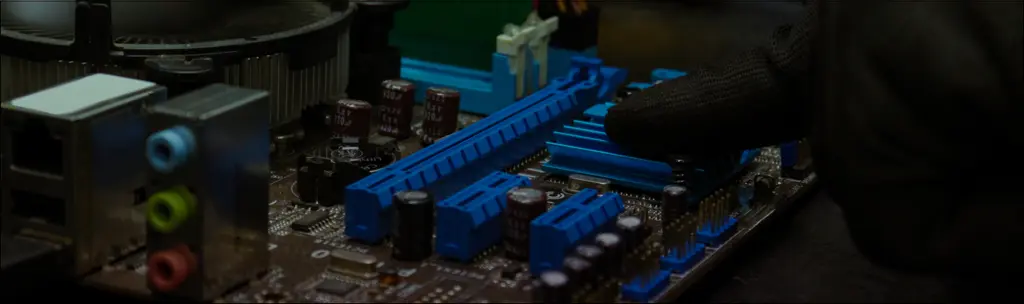
Solid-state drives do not respond to traditional overwriting in the same way as magnetic HDDs: the controller redistributes writes through wear leveling and keeps reserved blocks invisible to the operating system. For SSD and NVMe media, Mali uses the solid-state media procedures of certified Certus and BitRaser software, with result verification, or physical destruction when the medium cannot be sanitized.

In addition to the guarantees provided by Certus and BitRaser, Mali Brasil maintains additional controls to ensure process effectiveness in accordance with R2v3 requirements. Periodically, a sample of sanitized equipment is selected according to R2 criteria and subjected to data recovery attempts to independently verify that erasure worked.
So far, no data has been recovered from any equipment evaluated in this sampling. The control operates in three layers: (1) certified sanitization software; (2) issuance and retention of process records and evidence; (3) sampling tests with recovery attempts as an additional effectiveness check.
For defective media, backup tapes, critical server disks or contractual requirements, Mali performs physical destruction at its Guarulhos (SP) facility or on site at the client, using its own equipment with the client team able to observe the entire process. On-site service is assessed case by case, considering the complete process rather than only the volume of media.
The method used is shredding of HDDs, SSDs and optical media according to NIST SP 800-88, with a destruction report issued at the end of each batch.
The entire process is filmed, as required by R2v3 certification, and the recording is archived for 90 days and made available on request. Each medium is recorded by serial number before destruction. Fragments are sent for recycling within Mali’s R2v3-certified chain.
For each batch, the client receives:
Documents are issued as signed PDFs, emailed to the responsible contact and archived by Mali for at least three years.
If the equipment still has market value, Mali evaluates remarketing after sanitization, which may offset the service cost. For complete IT asset disposal, see ITAD.
Mali Brasil is R2v3-certified (SERI), the international standard for electronics recyclers, which includes specific data security requirements (Appendix B), as well as ISO 9001, ISO 14001 and ISO 45001. Certifications are audited annually by an independent body.

No. Formatting recreates the file structure, but data remains on the disk and can be recovered with free tools. Only verified overwriting or physical destruction guarantees erasure.
Sanitization erases data while preserving the medium for reuse or sale. Physical destruction makes the medium unusable. Both generate a certificate; the choice depends on the company security policy and equipment condition.
Yes. The certificate identifies each medium by serial number, the method used and the verification result, providing the evidence of deletion required by article 16 of the LGPD.
Yes. We offer on-site destruction using our equipment at your company, with your team observing the process. The method is defined case by case in the proposal.
Certus Erasure and BitRaser, both ADISA AAL5-certified and aligned with NIST SP 800-88. Each medium receives a digitally signed erasure report.
The price depends on the quantity and type of media, method (software sanitization or physical destruction) and location (at Mali or on site). Send the inventory through the form and Mali will return a proposal in 2 to 3 business days.
 +55 (11) 2859-4275
Address
+55 (11) 2859-4275
Address
Rua Etelvina, 63 – Vila Rosália.
Guarulhos SP – Zip-07070-140